
Why does that chronic tightness in your lower back or hip flexors return just hours after you’ve finished a long session on the yoga mat? It's a common frustration for athletes and desk workers alike. You feel like you're constantly fighting against your own anatomy. The reality is that your body has built-in neurological safeguards designed to prevent overextension. Without the right technique, your self-stretching routine might actually be triggering these protective locks instead of releasing them. This is where practitioner assisted stretching becomes an essential health practice rather than a simple luxury. By utilizing clinical expertise, a specialist can bypass these natural restrictions to restore your range of motion safely and effectively.
You deserve to move with fluid grace and resilience, yet you're likely tired of the cycle that yields no permanent change. In this guide, you'll learn how professional, practitioner-led sessions use advanced kinesiological principles to achieve long-lasting flexibility and improved postural alignment. We will explore the physiological differences between a casual pull and targeted decompression. You'll also see how expert guidance ensures your safety while pushing the boundaries of your athletic performance. From understanding the science of the stretch reflex to identifying the benefits of a personalized assessment, this exploration provides the roadmap you need to reclaim your physical freedom and move toward a life of empowerment.
Key Takeaways
- Understand why your nervous system creates "protective tension" that limits self-stretching and how to safely bypass these neurological locks.
- Learn how practitioner assisted stretching resets the stretch reflex through active resistance, allowing for deeper, more permanent structural changes.
- Distinguish between functional mobility work and passive relaxation to determine whether your body needs range-of-motion therapy or soft-tissue massage.
- Identify the critical anatomical knowledge and clinical background required to choose a high-quality specialist and ensure your long-term physical safety.
- Discover how targeted mobility sessions address the specific physical demands of an NYC lifestyle, from desk-bound stiffness to high-intensity athletic recovery.
Beyond the Reach: The Physiological Limits of Self-Stretching
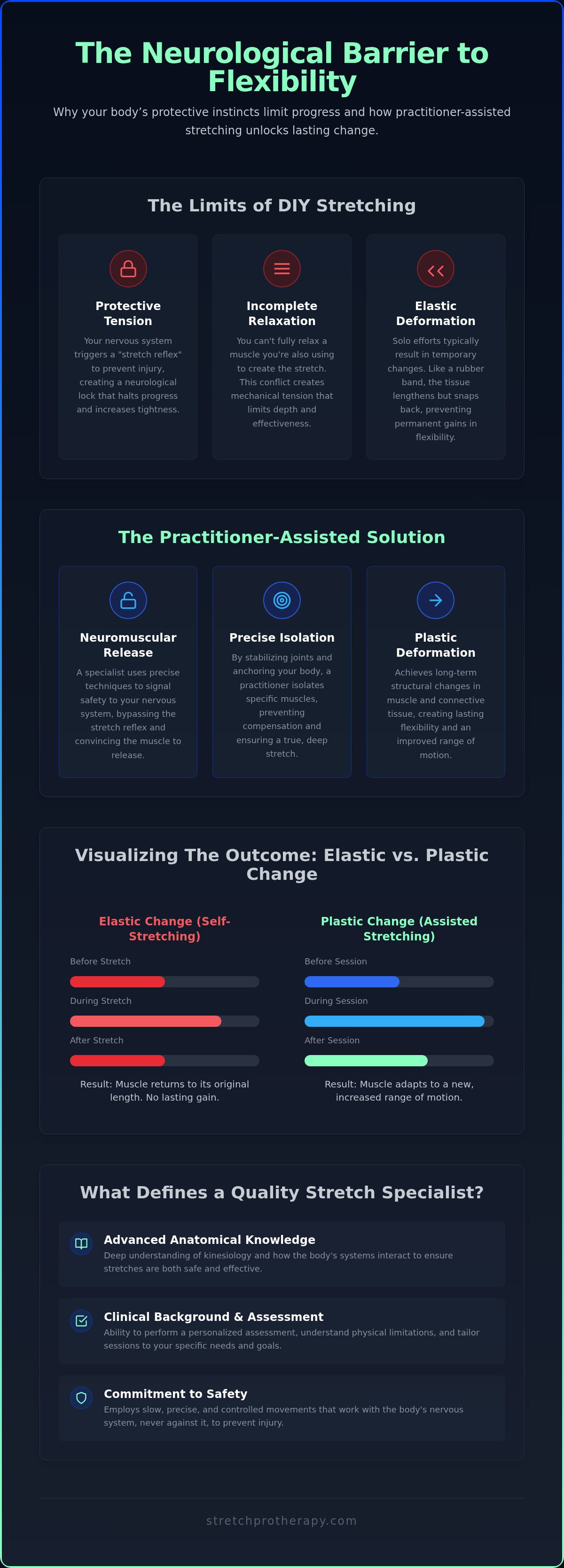
Many people view stretching as a solitary activity, something to be squeezed into the final five minutes of a workout or performed haphazardly in front of the television. However, true practitioner assisted stretching is a sophisticated, collaborative mobility intervention. It's a precise discipline where a certified specialist manages the load, angle, and intensity of the movement. This partnership allows you to move past the "wall" that typically halts progress during solo efforts. When you stretch yourself, your body is in a state of dual responsibility; you're both the person doing the work and the person trying to relax. This conflict creates mechanical tension that limits the depth of the stretch and prevents true decompression.
The primary hurdle in self-stretching is the inability to isolate specific muscle groups while maintaining total relaxation. To lengthen a muscle effectively, it needs to be passive. If you're straining your neck and shoulders just to reach your toes, your nervous system remains on high alert. Professional assistance removes this burden. By letting a specialist control the movement, you can psychologically and physically "let go," which is the essential first step toward restoring structural integrity and physical freedom.
The Barrier of Autogenic Inhibition
Your brain acts as a protective governor for your muscles. Through a process known as autogenic inhibition, the nervous system "locks" a muscle if it perceives a risk of overstretching or injury. This neurological emergency brake is why you often feel a sharp resistance that won't budge. A comprehensive understanding of Stretching reveals that passive techniques, where an external force moves the limb, are often the most effective for overcoming this reflex. Without expert guidance, most people simply "stretch around" a problem area. For instance, if your hip flexors are tight, you might unknowingly arch your lower back to compensate, leaving the actual restriction untouched while potentially stressing the spine.
Why DIY Stretching Often Fails to Stick
There's a significant difference between elastic and plastic deformation of body tissue. Elastic stretching is temporary; the muscle snaps back like a rubber band once the tension is released. Plastic deformation, however, involves long-term structural changes that lead to lasting flexibility and resilience. Most DIY efforts only achieve the former because they lack the necessary duration and stabilization. Chronic tightness, especially in "sticky" areas like the thoracic spine or hips, requires more than a thirty-second hold. It demands the targeted, stabilized pressure that only a practitioner assisted stretching session can provide. Without a specialist to anchor your pelvis or stabilize your joints, the force of the stretch dissipates through other areas, failing to create the restorative change your body needs for peak performance.
The Science of the Stretch: How Practitioners Bypass the Stretch Reflex
To understand why practitioner assisted stretching is so effective, you have to look at the continuous conversation between your muscles and your brain. Every muscle contains specialized sensors called muscle spindles. These sensors detect how fast and how far a muscle is stretching. If they sense a threat, they trigger the stretch reflex, causing the muscle to contract immediately to prevent injury. This is why a sudden, aggressive stretch often leaves you feeling tighter than before. A skilled practitioner knows how to navigate this reflex by moving slowly and precisely, never triggering the neurological alarm.
The Golgi Tendon Organ (GTO) is the essential counterpart to the muscle spindle. It sits where the muscle meets the tendon and monitors tension levels. When a practitioner applies a specific level of resistance, they activate the GTO, which signals the muscle to relax. This is a form of neuromuscular re-education. It isn't just about pulling on tissue; it's about convincing the nervous system that it's safe to expand. Given the importance of stretching for long-term joint health, mastering these neurological triggers is vital for anyone looking to maintain an active lifestyle.
PNF and AIS: The Gold Standards of Mobility
Proprioceptive Neuromuscular Facilitation (PNF) is a core technique used to reset your physical limits. It involves a "contract-relax" sequence where you push against the practitioner's resistance for several seconds before relaxing into a deeper stretch. This specific timing allows for a significant improvement in flexibility compared to static methods. Similarly, Active Isolated Stretching (AIS) uses short, two-second holds to prevent the stretch reflex from ever firing. Both techniques require a second person to ensure the timing and angles are exact. You can't replicate this precision alone, which is why a free assessment is the most logical way to see how these methods apply to your specific needs.
Decompressing the Body: Structural Integrity and Alignment
Assisted stretching does more than lengthen muscles; it creates space within the joints. This decompression is essential for spinal health and longevity. When your muscles are chronically tight, they pull your bones out of alignment, leading to unnecessary wear and tear. Practitioners also target the fascia, the body's vast connective web. By releasing fascial restrictions, we restore your body's structural blueprint. This holistic approach ensures that your movement isn't just greater in range, but higher in quality and resilience. By focusing on the parasympathetic nervous system through controlled breathing, we help your body transition from a state of restriction to one of peak performance.
Practitioner Assisted Stretching vs. Massage and Physical Therapy
Understanding the distinction between various wellness modalities is essential for building an effective recovery routine. While many services overlap, practitioner assisted stretching occupies a unique lane focused on active functional movement. It isn't merely a passive luxury; it's a structural intervention. Many clients find themselves choosing between a massage, a physical therapist, or a session at a stretch studio without fully grasping the physiological differences. By clarifying these roles, you can better navigate your journey toward long-term wellness and peak performance.
Assisted Stretching vs. Massage Therapy
Massage therapy is fundamentally a passive experience. It's something done "to" you, focusing primarily on soft tissue quality and circulation to induce relaxation. While it's excellent for soothing sore muscles, it rarely addresses the underlying neurological locks that limit your range of motion. In contrast, assisted stretching is a collaborative process performed "with" you. It requires your active participation and neurological engagement to reset the body’s structural blueprint. The outcome isn't just a temporary feeling of ease, but measurable, long-lasting mobility gains. Athletes often combine these methods, but they prioritize stretching when the goal is structural resilience and mechanical efficiency.
The Distinction from Clinical Physical Therapy
It's vital to differentiate between performance-based mobility and clinical physical therapy. Physical therapy is a medical discipline focused on acute injury rehabilitation. Once a patient is cleared of a clinical injury, they often find a gap between "not injured" and "performing at my best." Practitioner assisted stretching fills this gap. We focus on global mobility, which is how the entire body functions as a cohesive unit, rather than just local injury sites. Our specialists often work as a maintenance partner for those who have finished physical therapy but want to prevent the return of chronic tightness. This proactive approach focuses on decompression and alignment, ensuring that your body remains resilient against the daily stresses of an NYC lifestyle.
Choosing a dedicated specialist over a general personal trainer ensures a higher level of clinical authority. While a trainer may offer basic stretching, they often lack the 30+ years of expertise found at Stretchprotherapy. A specialist understands the subtle palpatory cues of your muscles, knowing exactly when to push and when to stabilize. This precision is what allows for the restoration of physical freedom without the risk of injury. It's the logical choice for those who view their health as a long-term investment in empowerment.
Identifying Quality: What to Look for in a Stretch Specialist
As practitioner assisted stretching gains mainstream popularity, the gap between casual fitness providers and clinical experts has widened. It's vital to recognize that your musculoskeletal system is a complex web of interconnected tissues. Trusting your structural integrity to a "stretcher" with only a weekend certification can be a significant risk. While some franchise models promote 60 or 70 hours of training as a gold standard, this is a minimal baseline compared to the thousands of hours required for clinical mastery. True safety and measurable results come from practitioners who possess deep anatomical knowledge and highly refined palpatory skills.
A high-quality specialist doesn't just follow a manual; they listen to the subtle cues of your body. They can feel the difference between a muscle that is physically short and one that is neurologically "locked" by the brain. This distinction is critical for preventing injury and achieving long-term wellness. If a provider offers a one-size-fits-all routine without first understanding your specific physical history, it's a clear red flag that they lack the expertise needed for restorative care.
Credentials and Experience Matter
When searching for a specialist, prioritize those with backgrounds in kinesiology or licensed health fields. There is a fundamental difference between a "stretcher" and a mobility specialist who understands the mechanics of joint decompression and fascial release. You should feel empowered to ask about their experience with your specific pain points, whether that's desk-bound postural fatigue or high-level athletic performance. At Stretchprotherapy, our specialists bring over 30 years of experience to the table, positioning our service as an essential health practice rather than a casual luxury.
The Assessment: The Blueprint for Success
The most important part of your first session happens before the first stretch even begins. A professional flexibility assessment is the blueprint for your success. This process should be data-driven and comprehensive, including:
- Gait Analysis: Observing how you walk to identify compensations in your kinetic chain.
- Postural Screening: Identifying structural imbalances that contribute to chronic tightness.
- Range of Motion (ROM) Testing: Measuring the specific limitations in your joints to track progress.
- Medical History Review: Ensuring every movement is safe and tailored to your past injuries or conditions.
A practitioner who skips these steps is simply guessing, which can lead to ineffective sessions or even physical setbacks. To experience the difference that a clinical approach makes, you should start with a free assessment to identify your unique structural needs.
Restoring Movement in NYC: The Stretchprotherapy Difference
New York City demands a level of physical resilience that few other environments require. Whether you're navigating the concrete canyons of Midtown or training for the marathon, your body absorbs a unique set of stresses. At Stretchprotherapy, we've spent over 30 years refining a philosophy that treats practitioner assisted stretching as an essential pillar of urban health. We don't offer generic, one-size-fits-all routines. Instead, we provide a clinical, expert-led experience designed to counteract the specific structural imbalances caused by the city's fast-paced lifestyle.
In your first session, you'll move through a comprehensive assessment that identifies exactly where your kinetic chain is restricted. This isn't just about feeling good in the moment; it's an investment in your longevity. After the session, many clients report a profound sense of "lightness" and decompression, as if the physical weight of the city has been lifted. This restorative process is the key to maintaining your mobility and performance for decades to come. It’s the difference between merely getting by and truly thriving in a demanding environment.
Targeted Solutions for NYC Professionals
The modern Manhattan professional often suffers from "tech neck" and "office hips," conditions born from hours of desk-bound fatigue. These aren't just minor annoyances; they're structural misalignments that lead to chronic pain and decreased productivity. Our specialists utilize targeted spinal decompression techniques to restore your natural posture and alignment. Because these are one-on-one sessions, they fit seamlessly into even the most demanding schedules. Beyond the physical relief, there's a significant mental clarity that comes with physical decompression. When your body stops sending constant pain signals to your brain, you gain the focus needed to excel in your career.
Elevating Athletic Performance
For NYC’s runners, lifters, and weekend warriors, injury prevention is the difference between staying active and being sidelined. Practitioner assisted stretching plays a critical role in both recovery and power output. By ensuring your muscles are at their optimal length, we help you generate more force with less effort. Our specialists partner with you to identify imbalances before they turn into injuries, allowing you to push your limits safely. This is about more than just flexibility; it's about building a body that is resilient, aligned, and ready for whatever challenge comes next.
Book your free flexibility assessment at our NYC studio today.
Reclaiming Your Physical Freedom in the Heart of NYC
True physical freedom isn't just about reaching further; it's about moving without the constant pushback of your own nervous system. You've seen how solo efforts often trigger protective tension that stalls progress. By choosing practitioner assisted stretching, you're opting for a clinically rooted intervention that addresses the body’s structural blueprint. This transition from restriction to empowerment requires more than a casual pull. It demands the precision of licensed health professionals who understand the delicate balance of alignment and decompression.
At Stretchprotherapy, our specialists bring over 30 years of experience to every personalized one-on-one session. We bridge the gap between simple fitness and high-level mobility work, ensuring your journey toward wellness is both safe and measurable. Don't let chronic tightness dictate your lifestyle or limit your athletic potential. Take the first step toward a more resilient, fluid version of yourself by identifying your specific imbalances today. Book Your Free NYC Flexibility Assessment and experience the restorative power of expert-led care. Your body is capable of more than you think; it’s time to move with confidence again.
Frequently Asked Questions
Is practitioner assisted stretching painful?
Practitioner assisted stretching shouldn't be painful. While you'll feel a deep sensation of tension as we target specific muscle groups, our specialists communicate with you throughout the session to ensure the intensity remains therapeutic. We focus on bypassing the stretch reflex, not forcing the tissue. If you feel sharp or localized pain, we adjust the angle immediately. This collaborative approach ensures your safety while effectively decompressing your joints and restoring physical freedom.
How often should I get a professional assisted stretch?
Most NYC clients see the best results with one to two sessions per week. This frequency allows your nervous system to adapt to new ranges of motion without regressing between visits. If you're an athlete in a high-intensity training block or a professional recovering from "office hips," you might benefit from more frequent targeted mobility work. We tailor the schedule during your initial assessment to match your specific lifestyle demands and wellness goals.
Can assisted stretching help with chronic lower back pain?
Yes, assisted stretching is highly effective for chronic lower back pain because it addresses the structural imbalances that cause it. Often, back pain is a secondary symptom of tight hip flexors or hamstrings pulling the pelvis out of alignment. By decompressing the spine and lengthening these restricted tissues, we reduce the mechanical stress on your lower back. This holistic focus on global mobility helps restore your body's natural blueprint and prevents pain from returning.
What should I wear to my first assisted stretching session?
You should wear comfortable, flexible clothing that allows for a full range of motion. Athletic leggings, gym shorts, and moisture-wicking shirts are ideal choices for your session in our NYC studio. Avoid restrictive fabrics like denim or skirts, as the practitioner will need to move your limbs through various planes of motion. Socks are typically required for hygiene and comfort. Wearing the right gear ensures that the focus remains on your mobility rather than your attire.
How long does it take to see results from professional stretching?
You'll likely feel an immediate sense of "lightness" and improved posture after your very first session. However, creating permanent plastic deformation in the tissue and resetting your nervous system's "governor" typically takes four to six weeks of consistent work. Long-lasting flexibility and structural resilience are the results of cumulative sessions. We track your progress through range of motion testing to ensure you're seeing measurable improvements in your daily movement and athletic performance.
Is practitioner assisted stretching safe for older adults?
It's exceptionally safe and beneficial for older adults. As we age, joint space often decreases and connective tissues become less elastic. Our licensed health professionals use gentle, controlled techniques to decompress joints and improve circulation without the risks associated with high-impact exercise. This practice helps seniors maintain independence by improving balance and reducing the stiffness that often leads to falls. Each session is personalized to accommodate your specific health history and physical comfort levels.
What is the difference between Stretchprotherapy and a high-volume stretching franchise?
The primary difference lies in our level of clinical authority and clinical experience. While many high-volume franchises rely on employees with minimal training backgrounds, Stretchprotherapy is operated by specialists with over 30 years of experience in the field. We don't use a one-size-fits-all routine. Our NYC studio provides a boutique environment where your program is designed by licensed health professionals, ensuring a higher standard of safety and more precise results for complex structural issues.
Do I need a free assessment if I already know I am tight?
Yes, the assessment is a vital first step even if you already feel tight. Knowing you're restricted is one thing, but identifying the specific source of that restriction is what leads to results. Our specialists use the assessment to check your gait, posture, and kinetic chain for imbalances you might not notice. This data-driven approach ensures we aren't just stretching your muscles, but actually correcting the structural issues that keep that tightness coming back.
