
Most New Yorkers assume that if their body feels tight or restricted, they need a medical referral for clinical rehabilitation, but the clinical path isn't always the most effective route to peak performance. You've likely spent your mornings foam rolling or attempting DIY stretches, only to find that your hamstrings remain stubbornly locked and your lower back feels compressed after a long day in Midtown. It's exhausting to feel like your own body is a barrier to your active lifestyle. When you're caught in the confusing gap between being "injured" and feeling truly mobile, choosing between assisted stretching vs physical therapy NYC becomes a vital decision for your long-term wellness.
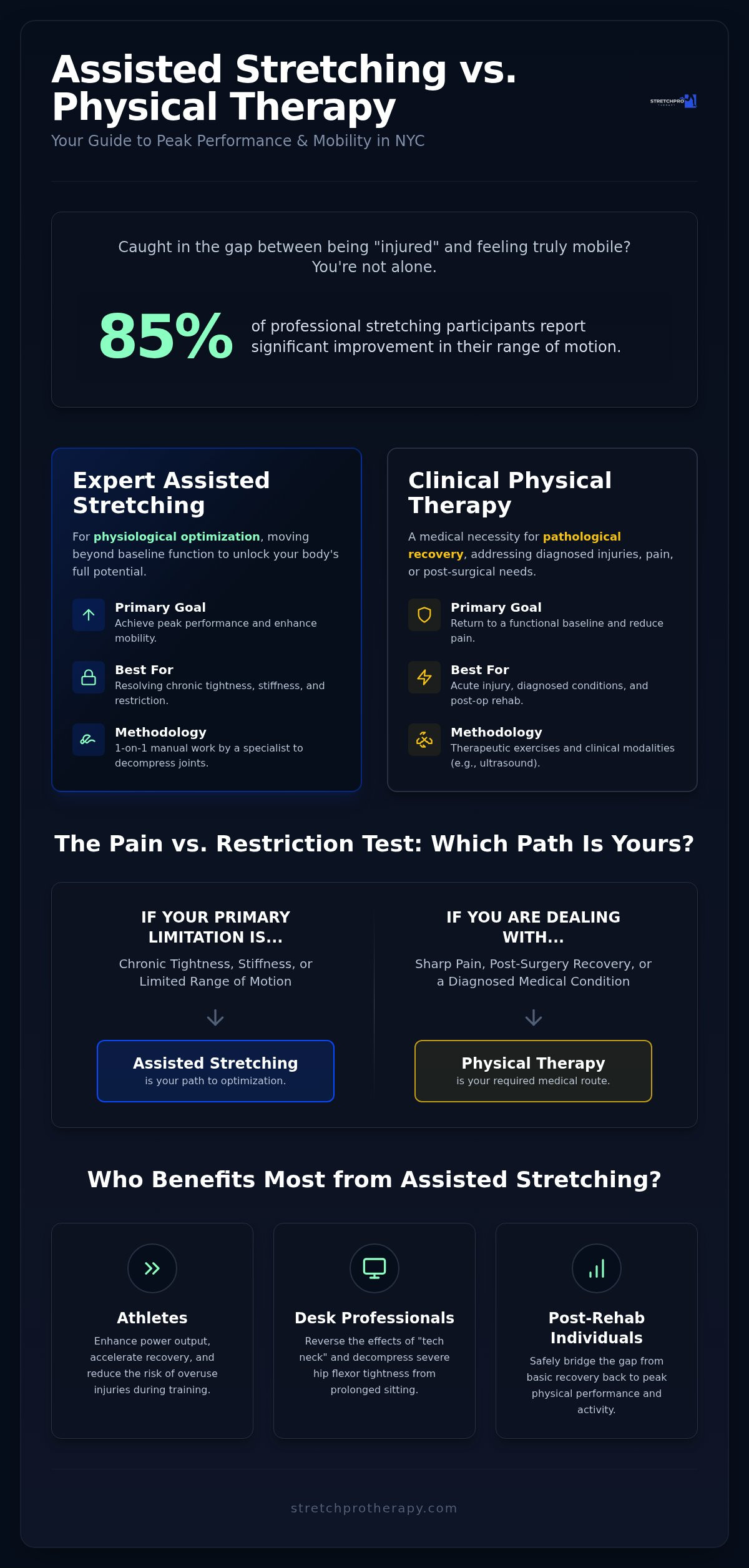
You deserve clarity on whether you need a licensed therapist to treat a diagnosed condition or a certified specialist to optimize your structural integrity. According to 2026 research, 85% of participants in professional stretching programs reported a significant improvement in their range of motion, proving that performance optimization is a distinct discipline from injury repair. This article will help you discover the critical differences between medical physical therapy and professional assisted stretching. We'll explore the specific physiological outcomes of each practice and provide a roadmap to help you choose the right partner for restoring your physical freedom and achieving peak athletic results.
Key Takeaways
- Distinguish between the pathological recovery focus of physical therapy and the physiological optimization provided by practitioner-led assisted stretching.
- Navigate the choice of assisted stretching vs physical therapy NYC by applying the "Pain vs. Restriction" test to your current physical limitations.
- Understand why professional certification and 30 years of expertise are critical for ensuring safe joint decompression and avoiding the risks of uncertified stretching.
- Learn how a free movement screening serves as a definitive roadmap for restoring your range of motion and achieving peak athletic performance.
Understanding Expert Assisted Stretching in the NYC Wellness Landscape
New York City's high-stress environment often forces physical health to the backseat until restriction transforms into a medical crisis. Expert assisted stretching is a specialized, practitioner-led modality designed to bridge the gap between casual fitness and clinical intervention. Unlike the static poses you might attempt on a yoga mat, this practice focuses on systematic joint mobility and deep muscle decompression. It represents a shift from traditional passive Stretching toward active-isolated techniques that respect the body's neurological boundaries. For those weighing assisted stretching vs physical therapy NYC, understanding this distinction is the first step toward achieving functional freedom, a state where your body moves without the nagging resistance of chronic tightness.
The Role of the Certified Stretch Specialist
A practitioner assisted stretching specialist brings a deep understanding of kinesiopathology to every session. This expertise is vital because the body possesses a natural defense mechanism called the stretch reflex. When an uncertified individual pushes a muscle too far or too fast, the nervous system forces that muscle to contract to prevent a tear. This reaction effectively neutralizes the stretch. Our specialists use precise angles and controlled resistance to bypass this reflex. This 1-on-1 environment allows for targeted anatomical work that is impossible to achieve alone. It ensures that each session builds structural resilience rather than causing micro-trauma or joint instability.
Who Benefits Most from Professional Stretching?
The NYC lifestyle creates unique physical demands that lead to structural imbalances. These issues often require more than just rest; they require active intervention to restore alignment.
- Athletes: High-performers utilize a personalized stretching program NYC to enhance power output and reduce the risk of overuse injuries during training cycles.
- Desk Professionals: Long hours at a workstation lead to "tech neck" and severe hip flexor compression. Systematic decompression helps reverse these effects by lengthening the anterior chain.
- Post-Rehab Individuals: Many people finish their clinical physical therapy but still feel "guarded" or stiff. Professional stretching helps these individuals transition from basic recovery back to peak physical performance.
By focusing on the physiological "why" behind your restriction, we help you move past the confusion of assisted stretching vs physical therapy NYC. Our goal is to provide a clear path toward a routine that supports your specific mobility and performance needs.
Assisted Stretching vs. Physical Therapy: A Comparative Breakdown
Choosing between assisted stretching vs physical therapy NYC depends on whether you're managing a clinical pathology or seeking to enhance your physiological capacity. Physical therapy is a medical necessity typically triggered by acute injury, surgery, or chronic pain conditions that require a formal diagnosis. Its primary goal is pathological recovery, returning a patient to a functional baseline. In contrast, expert assisted stretching focuses on physiological optimization. It starts where traditional medicine often ends, targeting the deep-seated restrictions that prevent you from moving with total fluidity.
The session structure reflects these differing goals. A typical physical therapy visit involves therapeutic exercises, gait training, and clinical modalities like ultrasound or electrical stimulation. While effective for healing, these sessions often require the patient to perform repetitive movements under supervision. Practitioner-led stretching prioritizes manual work. Instead of you doing the work to heal, the specialist does the work to decompress your joints and lengthen your fascia. This transition is often where the debate of assisted stretching vs physical therapy NYC becomes most relevant for those who have finished their clinical rehab but still feel "guarded" or stiff.
Many clients find that these services are most effective when used in a sequence. Once a patient "graduates" from physical therapy, they've reached a point where they are no longer "injured," yet they still feel a sense of structural tightness. This is the ideal time to transition to a performance-based mobility routine to ensure those old compensatory patterns don't return.
Scope of Practice and Clinical Boundaries
Physical therapists in New York operate within a medical framework, utilizing their diagnostic training to identify specific tissue damage or neurological deficits. They are the authorities on what is "broken." A stretch specialist acts as a restorative partner, focusing on the global movement of the human body. Because we don't focus on clinical pathology, we can dedicate the entire session to the nuances of your kinesiopathology. One on one stretching sessions NYC allow us to address the minor misalignments that a busy clinical clinic might overlook.
Techniques and Modalities Compared
The tools used in each discipline vary significantly based on the desired outcome. Physical therapy focuses on modalities like ultrasound, estim, and therapeutic exercise to reduce inflammation and rebuild strength. Assisted stretching utilizes PNF (Proprioceptive Neuromuscular Facilitation), traction, and decompression. Decompression is the structural relief of joint pressure through manual tension. If you're unsure which modality fits your current needs, a free movement assessment can help clarify your path from restriction to resilience.
Identifying Your Needs: Recovery, Performance, or Rehabilitation?
Deciding between assisted stretching vs physical therapy NYC often comes down to a simple "Pain vs. Restriction" test. If you experience sharp, localized discomfort that prevents basic movement, you're likely dealing with an injury that requires a medical diagnosis. However, if your body simply feels "stuck" or you can't reach the bottom of your squat despite having no specific injury, you're facing a mobility restriction. These structural blockages don't always require a doctor; they require a specialist who can decompress the tissue and restore your natural alignment.
Evaluate your current range of motion against the demands of your lifestyle. A marathon runner training in Central Park has different mobility requirements than a corporate executive spending ten hours a day in a high-back chair. Chronic desk-related issues, such as tight hip flexors and rounded shoulders, are often the result of repetitive postural strain rather than a clinical pathology. These "tech neck" symptoms respond exceptionally well to practitioner-led stretching because the goal is to reverse the compression of the workday, not to heal a torn ligament. Performance-minded New Yorkers often choose stretching specialists to gain an "athletic edge," focusing on how the body moves as a whole rather than fixing a single broken part.
When to Call a Physical Therapist
Physical therapy is the essential choice when your body signals a need for clinical repair. You should prioritize a licensed PT if you notice signs of acute injury, such as sudden swelling, bruising, or an inability to bear weight on a limb. Post-surgical recovery in New York State also mandates a clinical protocol to ensure proper tissue healing and scar tissue management. Additionally, if you experience neurological symptoms like numbness, tingling, or radiating nerve pain down your legs or arms, a diagnostic clinical approach is necessary to rule out serious underlying conditions.
When to Search for Expert Assisted Stretching Near Me
If your primary complaint is a general sense of stiffness that limits your gym performance or makes daily tasks feel laboured, a mobility specialist is your best resource. Many active individuals utilize these services as "pre-hab" to address minor imbalances before they escalate into injuries. It's about moving from a state of "getting by" to a state of peak performance. Working with a professional for one on one mobility sessions provides the dedicated attention needed to identify exactly where your fascia is bound. This proactive approach ensures your structural integrity remains resilient against the stresses of a busy NYC schedule.
The Value of Professional Certification and 30 Years of Expertise
Experience in the field of kinesiopathology isn't just about time; it's about the volume of unique anatomical patterns a practitioner has analyzed. With over 30 years of experience, our specialists understand that your chronic tightness is rarely a standalone issue. It's often a symptom of complex compensation patterns where one muscle group overworks to protect another. When you're evaluating assisted stretching vs physical therapy NYC, the level of expertise behind the service determines your safety. An uncertified practitioner might push a joint past its physiological limit, leading to muscle strains or joint instability. A seasoned expert knows how to read the subtle resistance in your tissue to ensure every movement promotes structural integrity.
Expertise serves as the essential bridge between lifestyle wellness and clinical safety. We don't just see a tight hamstring; we see how that tension affects your pelvic tilt and lumbar spine alignment. This high-level perspective allows us to identify the "why" behind your restriction before it escalates into a medical issue. By addressing these imbalances early, we provide a proactive alternative to the reactive nature of traditional medicine.
Beyond the "Stretch Gym" Experience
The rise of boutique stretching studios in New York has made mobility more accessible, but there's a vast difference between a generic "stretch gym" and a professional, therapy-based approach. One-size-fits-all routines often fail because they ignore your specific anatomical needs. We prioritize anatomical precision, targeting deep tissue groups like the psoas and piriformis that are notoriously difficult to reach through self-stretching or basic classes. These deep stabilizers require specific angles and controlled tension to release. A personalized assessment ensures that your session is tailored to your body's unique architecture, rather than a predetermined script.
The Science of Long-Term Mobility
Professional stretching is as much about the nervous system as it is about the muscles. By utilizing precise manual techniques, we influence the proprioceptors that govern your range of motion. This process signals the brain to "allow" the muscle to lengthen without triggering a protective contraction. Fascial health also plays a critical role in this transition, as healthy fascia provides the sliding surface necessary for fluid movement. Consistent assisted stretching remodels connective tissue for lasting results. Over time, this structural remodeling leads to increased resilience and a permanent shift in how your body handles physical stress. To see how this expertise can transform your movement, schedule a free assessment with our specialists today.
Optimizing Your NYC Mobility: The Stretchprotherapy Assessment
The Stretchprotherapy Free Assessment serves as the definitive movement screening for New Yorkers seeking to resolve the confusion of assisted stretching vs physical therapy NYC. This initial consultation is designed to remove the guesswork from your recovery or performance routine by providing a professional evaluation of your current structural state. Our specialists analyze your biomechanics to identify specific areas of restriction, active compensation patterns, and joint decompression needs. By establishing this baseline, we create a precise roadmap that transitions you from physical limitation to a state of empowerment and functional freedom.
This screening process is essential for ensuring you choose the most effective path for your specific goals. While some individuals may require the pathological focus of a medical clinic, others find that their needs are better met through the physiological optimization we provide. Our commitment to safety and precision ensures that every recommendation is rooted in over 30 years of expertise, providing you with a clear plan for measurable performance gains.
Your First NYC Session: What to Expect
Following your assessment, we transition you into a personalized stretching program NYC that is uniquely tailored to your anatomical profile. Your first full session at Stretchprotherapy focuses on the targeted manual techniques identified during your screening, such as joint traction and fascial lengthening. We utilize objective movement markers to track your progress over time, ensuring that the results are both visible and functional. The environment is professional and supportive, offering a results-oriented sanctuary where your physical wellness is the primary focus.
Booking Your Path to Performance
Integrating practitioner-led mobility work into a busy Manhattan schedule is a strategic investment in your long-term resilience. By making expert assisted stretching a non-negotiable health practice, you prevent the accumulation of structural tension that often leads to chronic discomfort. This proactive approach ensures your body remains capable of meeting the demands of an active city lifestyle, from marathon training to high-stakes professional environments. To experience the restorative power of a specialized mobility plan, schedule your free flexibility assessment in NYC today.
Elevate Your Movement and Performance
Choosing the right path for your body shouldn't be a source of stress. Whether you're recovering from a clinical injury or striving for your next personal best, the distinction between assisted stretching vs physical therapy NYC is clear. While physical therapy focuses on healing what's broken, professional assisted stretching optimizes your existing structural integrity. By addressing deep fascial restrictions and correcting hidden compensation patterns, you can move from a state of physical limitation to one of peak performance.
With over 30 years of expert experience, our certified specialists in kinesiopathology provide the anatomical precision your body deserves. We focus on tailored one-on-one mobility programs that respect your unique architecture and busy lifestyle. Ready to stop guessing and start moving better? Book Your Free Flexibility Assessment in NYC today to discover exactly what your body needs to thrive. You have the power to restore your range of motion and unlock your full potential; we're here to help you get there.
Frequently Asked Questions
Is assisted stretching the same as physical therapy?
Assisted stretching is not the same as physical therapy. While both involve manual techniques, physical therapy is a clinical intervention for diagnosing and treating injuries. Assisted stretching is a performance-based modality designed to optimize joint mobility and muscle length. When comparing assisted stretching vs physical therapy NYC, remember that PT restores basic function after trauma, whereas our specialists enhance your structural integrity to prevent future issues and boost athletic output.
Do I need a doctor referral for assisted stretching in NYC?
You don't need a doctor's referral to begin a program at Stretchprotherapy. Because we offer wellness and performance-based mobility rather than clinical medical treatment, you can access our services directly. This direct access allows busy New Yorkers to prioritize their structural health without the administrative delays of the medical system. Our free assessment provides the initial screening necessary to ensure our one-on-one sessions are the right fit for your goals.
Can assisted stretching help with chronic lower back pain?
Assisted stretching can be highly effective for chronic lower back pain that stems from muscular imbalances or poor posture. By decompressing the hip flexors and lengthening the hamstrings, we reduce the tension pulling on your lumbar spine. This structural relief often restores freedom of movement that static stretching cannot achieve. However, if your pain involves neurological symptoms like numbness, we recommend a clinical evaluation to rule out acute medical conditions.
How often should I get professional assisted stretching?
Most clients see the best results with one or two professional sessions per week. This frequency allows for consistent neurological adaptation and tissue remodeling without overtaxing the body. High-performance athletes or individuals with severe occupational tightness may benefit from more frequent visits initially. The goal is to build a foundation of mobility that eventually requires less frequent maintenance as your body adapts to its new, optimized range of motion.
What should I wear to my first stretching session?
You should wear comfortable, flexible athletic attire to your session. Yoga pants, gym shorts, and breathable t-shirts are ideal because they allow our specialists to move your limbs through a full range of motion without restriction. Avoid wearing restrictive fabrics like denim or clothing with bulky zippers and buttons. Since you'll remain fully clothed during the session, choosing gear that stays in place during various movements ensures your comfort and privacy.
Is assisted stretching covered by insurance in New York?
Professional assisted stretching is generally not covered by traditional medical insurance in New York. Insurance companies typically classify these sessions as wellness or performance optimization rather than medical necessity. However, some clients successfully use Health Savings Accounts (HSA) or Flexible Spending Accounts (FSA) to fund their mobility programs. We recommend checking with your specific plan administrator to see if practitioner-led stretching qualifies under your wellness benefits or preventative care options.
Can I do assisted stretching if I have a previous injury?
You can absolutely participate in assisted stretching if you have a previous injury, provided you've been cleared for physical activity. In fact, many of our clients use our services as post-rehab to regain the functional range of motion that clinical physical therapy didn't fully restore. We take your history into account during the initial assessment to ensure every movement is safe, precise, and supportive of your long-term structural resilience.
What is the difference between a stretch therapist and a physical therapist?
The primary difference lies in their educational scope and clinical focus. A physical therapist is a licensed medical professional trained to diagnose and treat specific pathologies or injuries. A stretch specialist focuses on the mechanics of healthy movement and kinesiopathology. At Stretchprotherapy, our specialists use their 30 years of experience to identify compensation patterns and optimize performance. We bridge the gap between clinical recovery and the peak physical freedom you desire.


